










 5 MIN READ | By Tessa Stirling | Updated on Oct 19, 2026
There are calls you never forget.
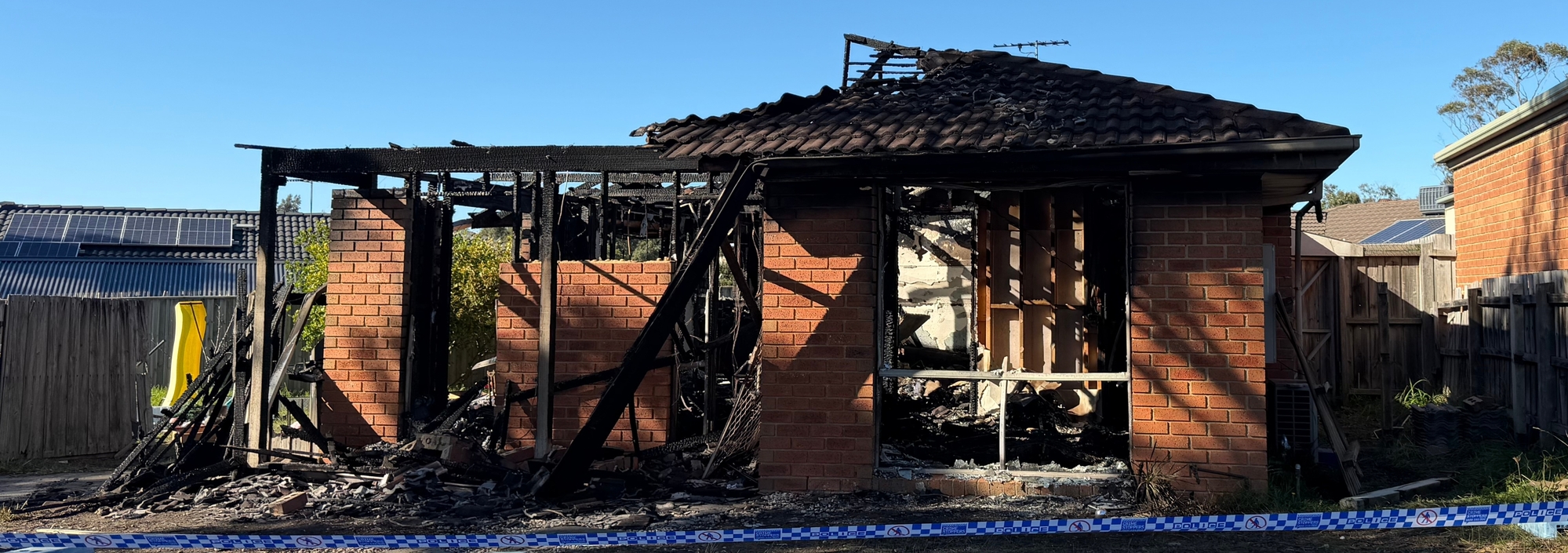
For LongView property manager Jenaya, one of those came at approximately 9:00pm on 31 July. An interstate client was on the line, shaken. A neighbour had contacted him to say the property had caught fire. Emergency services were still at the scene.
Jenaya didn't wait until morning.
Arriving at the scene
By 9:30pm, Jenaya was at the property. Police were still there. The scene was still active. She couldn't get close enough to properly assess the damage, so she did the next best thing. She FaceTimed her client from the street, letting him see the property from a distance and speak directly with police himself.
Her renter had already been taken to hospital.
Jenaya stayed at the property for an hour, gathering what information she could before returning home. She was back the following morning.
The day after
By the time Jenaya arrived at the property on Saturday, the owner's insurance company had already arranged temporary fencing. It was being erected when she got there. News reporters were also at the scene.
She took photographs for her client. She spent the afternoon on the phone with the client, with the insurance company trying to understand what came next.
Then came the news that made an already difficult situation significantly worse.
The insurance reality
Unfortunately, the owner’s landlord insurance policy had lapsed, and the building itself was also underinsured.
“I reassured my client that I would support him throughout the process and assist wherever I could,” Jenaya recalls. “That wasn’t just something I said. I meant it.”
The following Monday, Jenaya attended the property alongside the Home Assessor and the insurance company’s builder to assess the damage and begin the claims process. She also assisted the Fire Forensics team with their enquiries on behalf of her client.
It soon became clear that the financial impact would be significant. The building insurance policy would not cover the full cost of demolition and rebuilding, with the anticipated expenses exceeding the property’s sum insured.
While the policy included a benefit for debris removal, this was capped at 10% of the sum insured, with the cost of temporary fencing deducted from that amount. The insurance company subsequently confirmed that the property would be treated as a total loss.
“My client was completely unaware that the property was underinsured. With building costs increasing significantly, it’s more common than people realise,” Jenaya says.
The absence of landlord insurance added another layer of financial pressure. Without an active policy, the owner had no loss of rent cover to fall back on. Landlord insurance can provide protection against lost rental income when a property becomes uninhabitable, helping owners manage the financial impact while the property cannot be occupied. In this case, that support was unavailable.
There was also an immediate cost to address. The renter had paid rent in advance for a period extending beyond the date the property was destroyed, meaning the unused rent needed to be refunded. With the property no longer fit for occupation, that rental income could not simply be retained.
Already facing the prospect of significant demolition and rebuilding costs, the owner was now also dealing with the loss of rental income and the obligation to refund rent, all without the financial support that an active landlord insurance policy could have provided.
Working against the clock
Despite the property no longer being able to be managed as a rental, and no rental income or management fees being collected, Jenaya continued to support her client through the next steps.
Once the building notice arrived from the local council, a 60-day demolition deadline began. Jenaya sourced three independent demolition quotes and helped her client find a company able to meet the timeframe. She also assisted with the process of abolishing the gas and electricity meters and coordinated with the demolition company to work through the requirements before work could begin, including obtaining an Asset Protection Permit from Council.
While the usual day-to-day property management role had effectively come to an end, the need for support certainly hadn’t. Jenaya remained involved, helping her client navigate a complex and stressful situation with multiple parties, strict deadlines and significant financial implications.
Supporting the renter
Throughout all of this, Jenaya has also been providing support that goes well beyond the usual responsibilities of property management.
The renter sustained significant burns in the fire and spent an extended period in hospital, losing everything in the process.
When she was ready to start rebuilding her life and looking for a new home, she faced another unexpected challenge: she no longer had any identification documents. Jenaya was able to locate copies of the documents provided with her original rental application, giving her a starting point to begin applying for housing again.
Jenaya also met the renter at the property in person to help her retrieve belongings from the sheds at the rear of the property, which had been spared from the fire.
These may seem like small acts in the context of such a devastating event, but they made a practical difference at a time when the renter was facing the enormous task of starting over.
“This has been an incredibly emotional and exhausting process for everyone involved,” Jenaya reflects. “But if sharing this experience can help prevent someone else from going through something similar, I know my client and I would be incredibly grateful to know that something positive has come from what has undoubtedly been a very difficult experience.”
What this experience taught us and what it should teach every property owner
Jenaya has already spoken with a number of her other clients about this experience and encouraged them to review their current coverage including the fine print and exclusions they may not have read closely.
Her message is direct:
1. Make sure your landlord insurance policy is active.
Even with a great renter, landlord insurance is important for protecting your rental income if the property becomes uninhabitable following an insured event such as a house fire. Depending on the policy, it can also cover landlord-owned items such as blinds and appliances.
2. Check your sum insured not just that a policy exists.
Building costs have risen sharply in recent years. A sum insured that felt adequate three or four years ago may no longer cover the cost of demolition and rebuilding your property today. Ask your insurer to confirm the current replacement value and compare it against your sum insured.
3. Read the fine print on your removal of debris benefit.
Many owners do not realise this benefit is capped, often at 10% of the sum insured and that costs like temporary fencing are deducted from it. In a total loss scenario, these details matter enormously.
4. Review your policies annually.
Markets change. Building costs change. Your coverage should keep pace with both.
The role a property manager plays when it really matters
This case is not about a checklist of tasks completed. It is a record of what it looks like when a property manager treats their client's crisis as their own turning up at a fire scene at 9:30pm, FaceTiming a distressed interstate owner from the street, coordinating demolition quotes, helping a hospitalised renter find her identification documents.
Property management is often described in terms of rent collection and routine inspections. Situations like this one are a reminder that the work is about people, owners who are thousands of kilometres away and need someone they trust on the ground, and renters who need to know that someone is in their corner even when everything has gone wrong.
If you would like to review how your property is managed, or if this article has prompted you to think about the insurance coverage on your investment property, we would welcome the conversation.